The Léger Wine Guide: A Comprehensive Overview
The Léger Wine Guide‚ born from a family legacy and propelled by the “Drops of God” phenomenon‚ has become a pivotal force in the global wine market.
Its origins trace back to Alexandre Léger’s dedication‚ culminating in a guide renowned for its rigorous methodology and a cellar boasting 87‚000 bottles.
Origins and Founding of the Léger Guide
The Léger Wine Guide didn’t emerge overnight; its foundation is deeply rooted in the personal journey of Alexandre Léger. Initially facing ostracization within French academic circles‚ Léger accepted a teaching position in Tokyo‚ a pivotal move that ultimately shaped his future endeavors. It was during this period of professional transition and dedicated study that the seeds of the guide were sown.
Driven by an unwavering passion for wine and a commitment to meticulous evaluation‚ Léger began to formulate a unique approach to wine criticism. This dedication eventually led to the establishment of the Léger guide‚ a project born from years of accumulated knowledge‚ relentless pursuit of excellence‚ and a desire to share his insights with the world.
The guide’s inception wasn’t merely a professional undertaking; it was a testament to Léger’s unwavering ethic and a response to perceived shortcomings in existing wine evaluation systems. He envisioned a guide that would transcend traditional boundaries and offer a fresh‚ insightful perspective on the world of wine‚ ultimately becoming a benchmark for quality and discernment.
Alexandre Léger: The Visionary Behind the Guide
Alexandre Léger stands as the intellectual and driving force behind the esteemed Léger Wine Guide. Despite possessing “impeccable knowledge‚ passion‚ dedication‚ and ethic” regarding wine‚ some critiques suggest a flawed personal character. This complexity doesn’t diminish his profound impact on the wine world‚ but rather adds a layer of intrigue to his legacy.
His journey wasn’t without obstacles; facing ostracism from French academic circles‚ Léger demonstrated resilience by accepting a teaching position in Tokyo. This experience broadened his perspective and solidified his commitment to developing a revolutionary approach to wine evaluation. He wasn’t simply a critic‚ but a scholar and educator dedicated to unraveling the nuances of each vintage.
Léger’s vision extended beyond mere scoring; he aimed to create a guide that celebrated the artistry and complexity of winemaking. His dedication ultimately resulted in the creation of a guide that has captivated wine enthusiasts and professionals alike‚ solidifying his position as a true visionary in the field.
The Léger Family Legacy and Wine Expertise
The Léger Wine Guide isn’t solely the product of Alexandre Léger’s vision; it’s deeply rooted in a family history steeped in wine appreciation and knowledge. This legacy is powerfully demonstrated through the generations‚ culminating in the extraordinary wine cellar amassed by the family.
This cellar‚ described as “the greatest private wine collection in the world‚” contains a staggering 87‚000 bottles‚ valued at an estimated ¥167 billion (approximately $148 million). Its sheer scale and rarity speak volumes about the Léger family’s dedication to collecting and preserving exceptional wines. This collection isn’t merely a display of wealth‚ but a tangible representation of decades of discerning taste and expertise.
The passing of the torch to Camille Léger‚ as depicted in “Drops of God‚” highlights the continuation of this family tradition. Her training and journey to understand her father’s legacy underscore the importance of inherited knowledge and the enduring power of the Léger family’s influence on the world of wine.
Understanding the Léger Guide’s Methodology
The Léger Guide employs a detailed methodology‚ focusing on sensory evaluation – color‚ aroma‚ and taste – alongside understanding wine breathing and oxidation’s impact on nuanced flavors.
The Scoring System and its Nuances
The Léger Wine Guide’s scoring system isn’t simply a numerical assessment; it’s a complex evaluation built upon layers of sensory analysis and contextual understanding. While the precise mechanics remain somewhat guarded‚ the guide’s reputation hinges on its perceived objectivity and depth. It’s understood that the system doesn’t solely prioritize traditional markers of quality‚ such as oak aging or vineyard prestige.
Instead‚ the scoring heavily emphasizes the wine’s ability to evoke emotion and tell a story. This aligns with Alexandre Léger’s philosophy‚ which valued the subjective experience of wine alongside technical proficiency. The nuances lie in how the guide weighs different sensory attributes – the intensity and complexity of aromas‚ the balance of flavors‚ the length of the finish – and how it accounts for the wine’s intended style and price point.
Furthermore‚ the scoring isn’t static. A wine’s score can evolve over time as it matures and reveals new characteristics. This dynamic approach reflects the understanding that wine is a living entity‚ constantly changing and developing. The guide’s reviewers are trained to identify these subtle shifts and adjust their assessments accordingly‚ ensuring that the scores remain relevant and informative.
Focus on Sensory Evaluation: Color‚ Aroma‚ and Taste
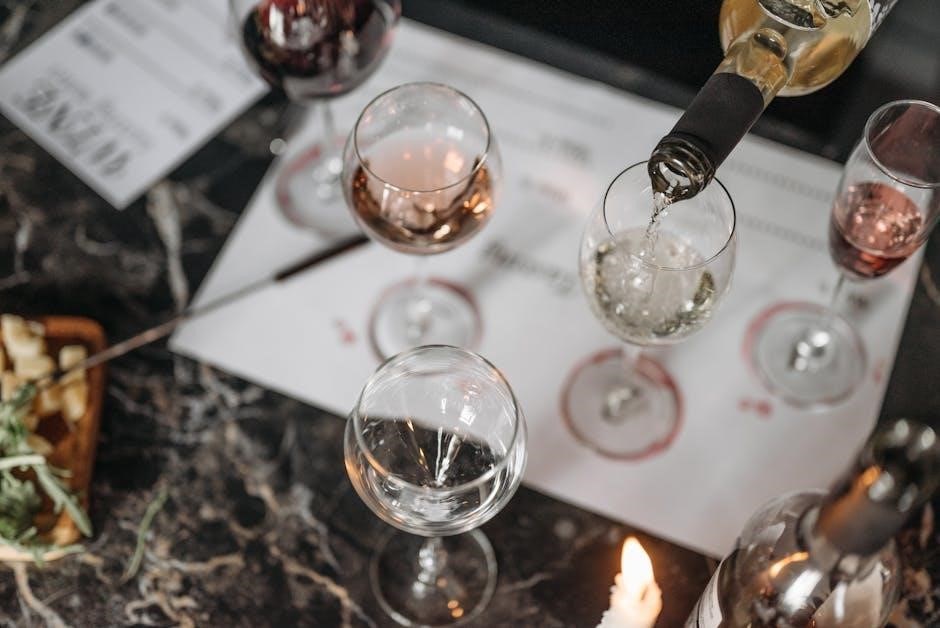
The Léger Wine Guide places paramount importance on sensory evaluation‚ meticulously dissecting each wine’s color‚ aroma‚ and taste profile. As demonstrated in the “Drops of God” series‚ the guide’s methodology emphasizes observing the wine against a white background to accurately assess its hue‚ providing clues to its age and concentration. This visual analysis is merely the starting point.
The guide’s reviewers are trained to systematically analyze the wine’s aromatic complexity‚ initially allowing the wine to “breathe” to release its full spectrum of scents. Subsequent inhalations are encouraged to detect evolving aromas‚ even uncovering unexpected notes like truffle through oxidation. This highlights the dynamic nature of wine perception.
Finally‚ the taste evaluation goes beyond simply identifying flavors. It involves assessing the wine’s structure – its acidity‚ tannins‚ and alcohol – and how these elements interact to create a harmonious and memorable experience. The guide’s scoring reflects not just what you taste‚ but how the wine feels on the palate and the overall impression it leaves.
The Importance of Wine Breathing and Oxidation
The Léger Wine Guide deeply values understanding the transformative effects of wine breathing and oxidation. As vividly illustrated in “Drops of God‚” allowing a wine to breathe isn’t merely a ritual; it’s a crucial step in unlocking its full potential. Initial aromas‚ often dominated by reductive notes‚ give way to a more complex bouquet as the wine interacts with oxygen.
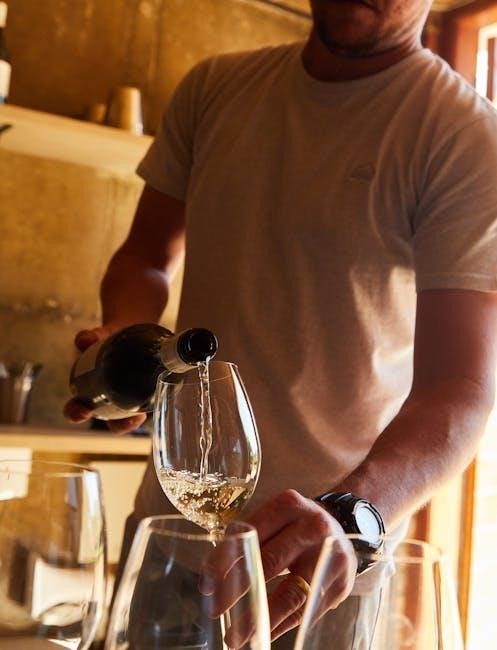
This process of oxidation isn’t detrimental‚ but rather a key component of wine evolution. The guide’s methodology recognizes that certain aromas‚ like the prized truffle notes‚ only emerge after sufficient oxygen exposure. This demonstrates that a wine’s character isn’t static‚ but rather unfolds over time.
Reviewers utilizing the Léger system are trained to assess how a wine changes with aeration‚ noting the development of new scents and flavors. This nuanced understanding of oxidation informs their scoring‚ recognizing wines that benefit from breathing and those that are best enjoyed immediately. It’s a testament to the guide’s commitment to holistic wine evaluation.
The Impact of “Drops of God” on the Guide’s Popularity
The “Drops of God” manga and subsequent TV series dramatically amplified the Léger Guide’s reach‚ captivating audiences with Camille Léger’s training and the allure of the extraordinary 87‚000-bottle cellar.
The Manga and TV Series Influence
The adaptation of Yuko Kōjim’s manga‚ “Drops of God‚” into an Apple TV+ series proved transformative for the Léger Wine Guide’s visibility and public perception. The series intricately weaves the guide’s principles into its narrative‚ showcasing the meticulous wine-tasting techniques championed by Alexandre and‚ later‚ Camille Léger.
Episode 2‚ in particular‚ highlights crucial sensory evaluation methods – observing color against a white backdrop to assess age and intensity‚ and the importance of allowing wine to “breathe” to unlock evolving aromas. This visual demonstration resonated with viewers‚ demystifying the often-intimidating world of wine appreciation.
The series doesn’t merely present the guide as a tool; it embodies its philosophy. The narrative centers around deciphering Alexandre Léger’s cryptic notes within the guide‚ turning each bottle into a puzzle and elevating the act of tasting into a thrilling investigation. This narrative structure effectively communicates the depth and complexity inherent in the Léger Guide’s methodology‚ attracting a broader audience beyond dedicated wine connoisseurs.
Furthermore‚ the series’ global reach introduced the Léger Guide to international markets‚ fostering a newfound curiosity and demand for its reviews and recommendations.
Camille Léger’s Training and Wine Technique
Camille Léger’s journey from a medical professional to a sommelier is central to the “Drops of God” narrative‚ and showcases the rigorous training demanded by her father‚ Alexandre. Initially hesitant‚ Camille’s immersion into the world of wine is depicted as a challenging yet transformative process‚ emphasizing the importance of sensory evaluation and a deep understanding of vinification.
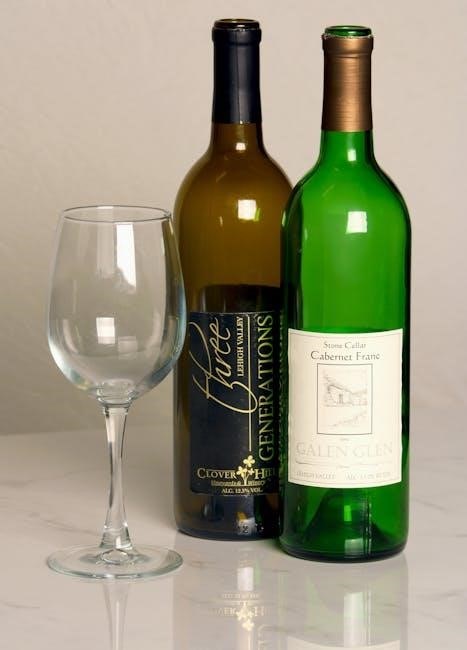
The series meticulously illustrates her development of crucial techniques‚ such as analyzing wine color against a neutral surface to discern age and boldness. She learns to patiently allow wines to breathe‚ recognizing how oxidation unlocks hidden aromatic complexities – even revealing notes like truffle.
Her training isn’t simply about identifying flavors; it’s about understanding the story each wine tells‚ a legacy instilled by Alexandre. This approach aligns perfectly with the Léger Guide’s emphasis on holistic assessment‚ considering not just taste‚ but also aroma‚ color‚ and the wine’s overall character.
Camille’s dedication and evolving expertise become a testament to the Léger family’s commitment to wine knowledge and a driving force within the series’ plot.
The Wine Cellar: A Collection of Unparalleled Value
At the heart of the “Drops of God” saga lies Alexandre Léger’s extraordinary wine cellar‚ a collection widely regarded as the greatest private assemblage in the world. Comprising a staggering 87‚000 bottles‚ it’s not merely a repository of rare vintages‚ but a tangible representation of a lifetime dedicated to the pursuit of vinous excellence.
The cellar’s value is estimated at an astounding ¥167 billion (approximately $148 million)‚ reflecting the rarity‚ age‚ and provenance of its contents. It’s a treasure trove of both celebrated and obscure wines‚ meticulously curated by Alexandre over decades of global exploration and discerning acquisitions.
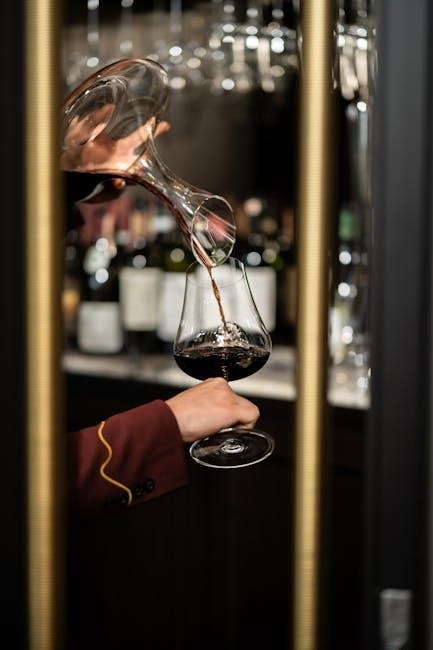
This collection isn’t simply about monetary worth; it embodies a profound understanding of wine history‚ terroir‚ and the artistry of winemaking. The cellar serves as a central plot device‚ driving the narrative as Camille and Luca navigate its secrets‚ each bottle holding clues to their father’s legacy and the future of the Léger Guide.
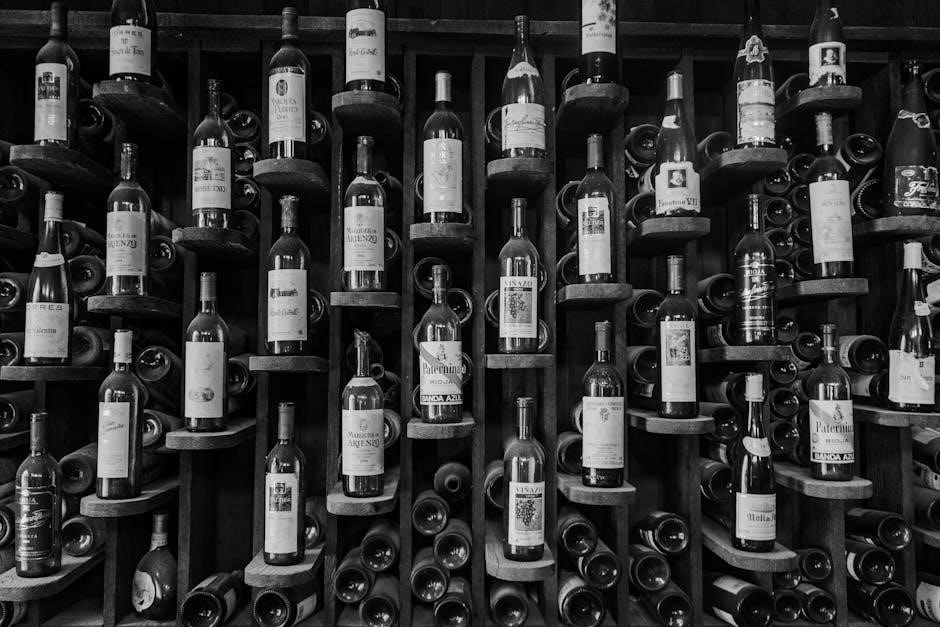
Its sheer scale and unparalleled quality elevate the Léger family’s reputation and underscore their profound influence within the wine world.
Controversies and Challenges Surrounding the Guide
The Léger Guide faces scrutiny regarding potential conflicts of interest‚ with allegations of insider trading fueled by early access to reviews and Luca’s questionable motivations.
Luca’s Motivations and Potential Conflicts of Interest
Luca’s character within the “Drops of God” narrative presents a complex web of motivations‚ raising significant questions about potential conflicts of interest surrounding the Léger Wine Guide. He displays a fervent ambition‚ seemingly driven by a desire to control or manipulate the wine market for personal gain‚ rather than a genuine passion for oenology.
Evidence suggests a clandestine collaboration between Luca and the guide’s editor‚ granting him privileged access to forthcoming reviews. This illicit arrangement allows Luca to strategically invest in wines predicted to receive favorable ratings‚ subsequently profiting from their increased market value. Conversely‚ he capitalizes on negative reviews by selling off wines anticipated to decline in popularity – a clear case of insider trading.
His intense reaction to Camille’s decision to forgo inheriting the guide further underscores his manipulative tendencies. It’s implied that Luca envisioned leveraging the guide’s influence to further his own financial objectives‚ and Camille’s independence threatens those plans. While possessing a degree of wine knowledge‚ Luca’s actions demonstrate a prioritization of profit over ethical considerations‚ casting a shadow over the integrity of the Léger Guide.
Insider Trading Concerns and Early Access to Reviews
The Léger Wine Guide’s influence on the wine market has unfortunately attracted concerns regarding insider trading‚ fueled by allegations of premature access to reviews. A central figure in these accusations is Luca‚ who appears to have cultivated a relationship with the guide’s editor to obtain advanced copies of forthcoming evaluations.
This privileged access allowed Luca to engage in potentially illegal and unethical practices. By knowing which wines would be positively reviewed‚ he could purchase them before publication‚ anticipating a surge in demand and subsequent price increases. Conversely‚ he could offload wines expected to receive unfavorable ratings‚ mitigating potential losses;
Reddit discussions and observations within the “Drops of God” series highlight this pattern‚ suggesting a deliberate scheme to exploit the guide’s power for financial gain. This raises serious questions about the fairness and transparency of the Léger Guide‚ and whether its ratings are truly objective or susceptible to manipulation. The integrity of the guide‚ and the trust placed in its assessments‚ are directly threatened by these allegations of illicit activity.
Alexandre Léger’s Personal Life and Professional Reputation
Alexandre Léger‚ the founder of the esteemed wine guide‚ presents a complex figure – a brilliant palate and dedicated professional‚ yet seemingly flawed in his personal conduct. His story reveals a man ostracized by the French academic wine community‚ leading him to accept a teaching position in Tokyo‚ a move suggesting professional setbacks alongside unwavering passion.
Despite his impeccable knowledge‚ dedication‚ and ethical approach to wine itself‚ criticisms paint him as a “terrible human‚” hinting at interpersonal difficulties and a potentially abrasive personality. This dichotomy – professional excellence versus personal failings – casts a shadow over his legacy and raises questions about the motivations behind the Léger Guide’s creation.
The establishment of the guide itself can be viewed as a response to his exclusion from traditional French circles‚ a means of asserting his expertise on his own terms. His personal life‚ therefore‚ is inextricably linked to the guide’s origins and continues to fuel speculation about its underlying purpose and potential biases.
The Future of the Léger Wine Guide
The Léger Guide faces expansion possibilities via digital platforms‚ demanding maintained integrity and unbiased evaluations. Its role in the global wine market remains significant and evolving.
Potential for Expansion and Digital Platforms
The Léger Wine Guide’s future undoubtedly lies in embracing digital platforms‚ moving beyond its traditional printed format to reach a wider‚ more engaged audience. This expansion isn’t merely about accessibility; it’s about enhancing the user experience with interactive features. Imagine a digital Léger Guide offering virtual wine tastings‚ detailed vineyard maps‚ and personalized recommendations based on user preferences.
A dedicated mobile application could allow users to scan wine labels‚ instantly accessing Léger Guide reviews and scores. Furthermore‚ integrating augmented reality could bring wine regions to life‚ offering immersive experiences. Social media integration would foster a community of wine enthusiasts‚ facilitating discussions and knowledge sharing.
However‚ this digital shift must be carefully managed. Maintaining the guide’s reputation for objectivity and avoiding the pitfalls of algorithmic bias are crucial. The challenge lies in leveraging technology to enhance‚ not compromise‚ the Léger Guide’s core values of rigorous evaluation and insightful commentary. A subscription model offering exclusive content and early access to reviews could also be explored‚ ensuring the guide’s financial sustainability in the digital age.
Maintaining Integrity and Avoiding Bias
The Léger Wine Guide’s enduring success hinges on preserving its integrity and fiercely guarding against any perception of bias. Recent controversies‚ such as concerns regarding insider trading and potential conflicts of interest surrounding Luca’s motivations‚ underscore the importance of robust ethical safeguards. Transparency is paramount; the guide must clearly disclose any potential affiliations or relationships that could influence its reviews.
Independent auditing of the scoring process and reviewer training are essential to ensure consistency and objectivity. The guide should actively resist external pressures from wineries or industry stakeholders. Furthermore‚ diversifying the panel of tasters‚ bringing in voices from different backgrounds and perspectives‚ can mitigate unconscious biases.
The legacy of Alexandre Léger‚ built on dedication and passion‚ demands a commitment to unbiased evaluation. While digital platforms offer exciting opportunities‚ they also present new challenges in maintaining editorial control and preventing manipulation. Upholding these principles is not merely a matter of reputation; it’s fundamental to the guide’s credibility and its role in shaping the global wine landscape.
The Guide’s Role in the Global Wine Market
The Léger Wine Guide has rapidly ascended to become a significant influencer within the global wine market‚ impacting consumer choices and driving demand. The surge in popularity‚ fueled by the “Drops of God” manga and subsequent TV series‚ has broadened its reach beyond traditional wine connoisseurs‚ attracting a new generation of enthusiasts.
The guide’s detailed reviews and scoring system provide a benchmark for quality‚ influencing wine pricing and distribution. Wineries actively seek favorable ratings‚ recognizing the substantial commercial benefits. The existence of a wine cellar valued at an estimated ¥167 billion (approximately $148 million) further elevates the guide’s prestige and authority.
However‚ this influence carries responsibility. The guide’s power to make or break a wine’s reputation necessitates careful consideration and ethical conduct. As it expands into digital platforms‚ its role will likely evolve‚ potentially shaping future trends and fostering greater accessibility within the wine world.